
What to Look For When Sourcing Single Skin Roof Panels
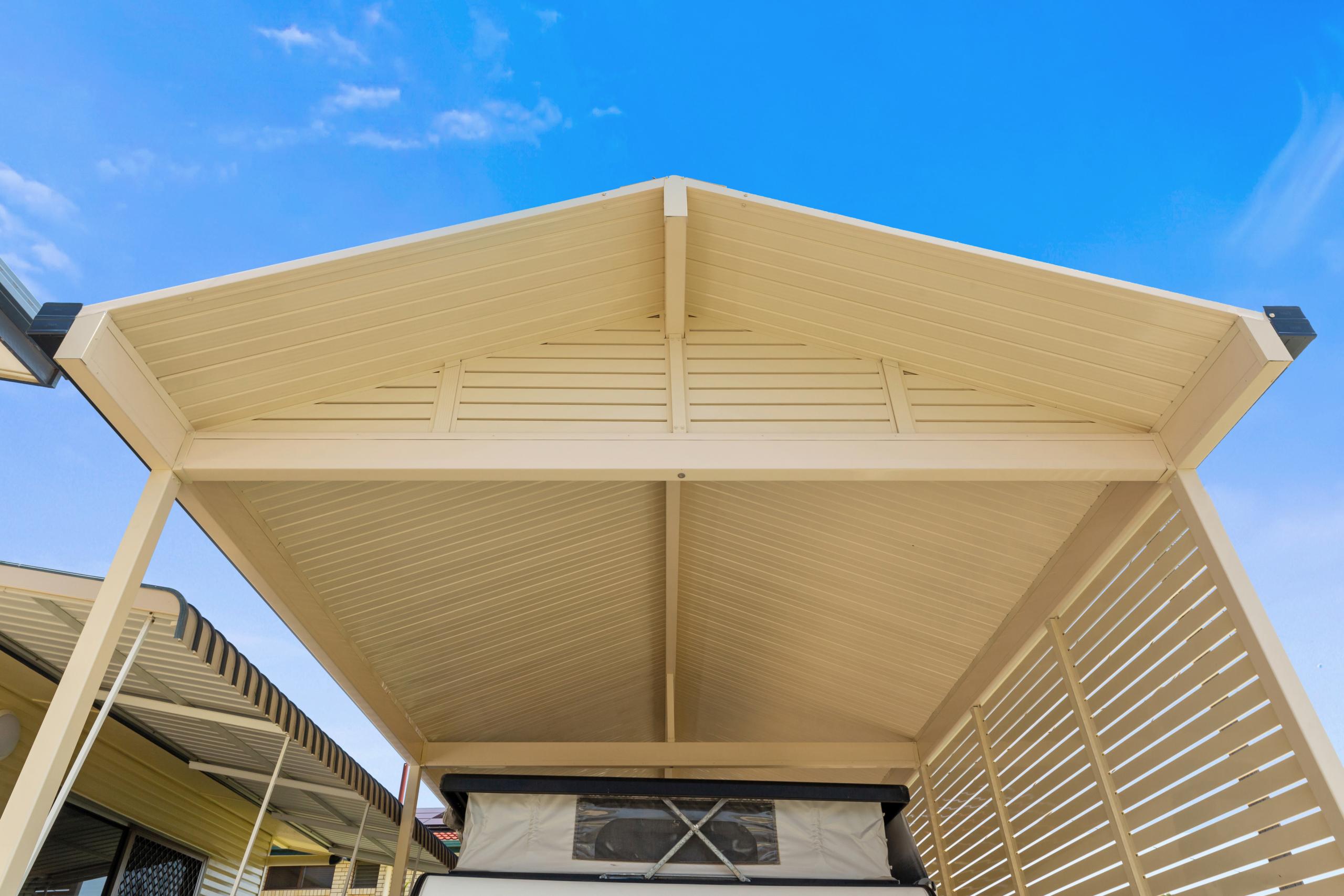
Selecting a single skin roofing panel requires consideration of material performance, structural capability, and compliance with project requirements.
When sourcing single skin roofing panels, factors such as steel grade, spanning performance, coating systems, and supporting documentation all influence long-term performance and installation outcomes. Addressing these considerations prior to specification supports a more consistent and reliable result.
The Steel Behind the Panel
The steel behind a roofing panel is one of the most important factors in how it performs over its service life. At Apollo Roofing Solutions, both single skin profiles are manufactured from G550 Hi Tensile steel. This provides increased structural strength compared to lower grade alternatives. Material specifications should be supported by documented technical data. Steel grade and thickness are key factors in overall system performance.
Two Profiles to Suit Different Projects
Apollo Roofing Solutions supplies two single skin profiles designed to suit different project requirements. The Unilink 2000 is roll formed from G550 Hi Tensile 0.42mm BMT steel and provides 450mm coverage per sheet. The Outdoor Flat Mark II is roll formed from G550 Hi Tensile 0.48mm BMT steel, providing 302mm coverage per sheet.
Profile selection should align with project specifications rather than being limited by availability. Coverage per sheet influences material quantities and installation efficiency, impacting both cost and installation time.
Spanning 4.7 Metres Without Extra Support
Both profiles span up to 4.7 metres without requiring intermediate rafters or battens underneath. Fewer structural supports mean the installation is simpler, faster, and uses less material overall. For contractors working across a consistent pipeline of jobs, less time on site, fewer materials to procure and handle, gives a cleaner finished result.
Reducing the number of required supports can improve installation efficiency and reduce material requirements. Span performance should be supported by certified testing and compliance documentation, with performance figures aligned to Australian Standards.
The conditions under which span performance is measured can vary between manufacturers, and unverified numbers are not a reliable basis for structural decisions. Our metal sheet roofing undergoes rigorous testing to meet Australian Standards and building legislation
Panels Cut to Length Before They Arrive
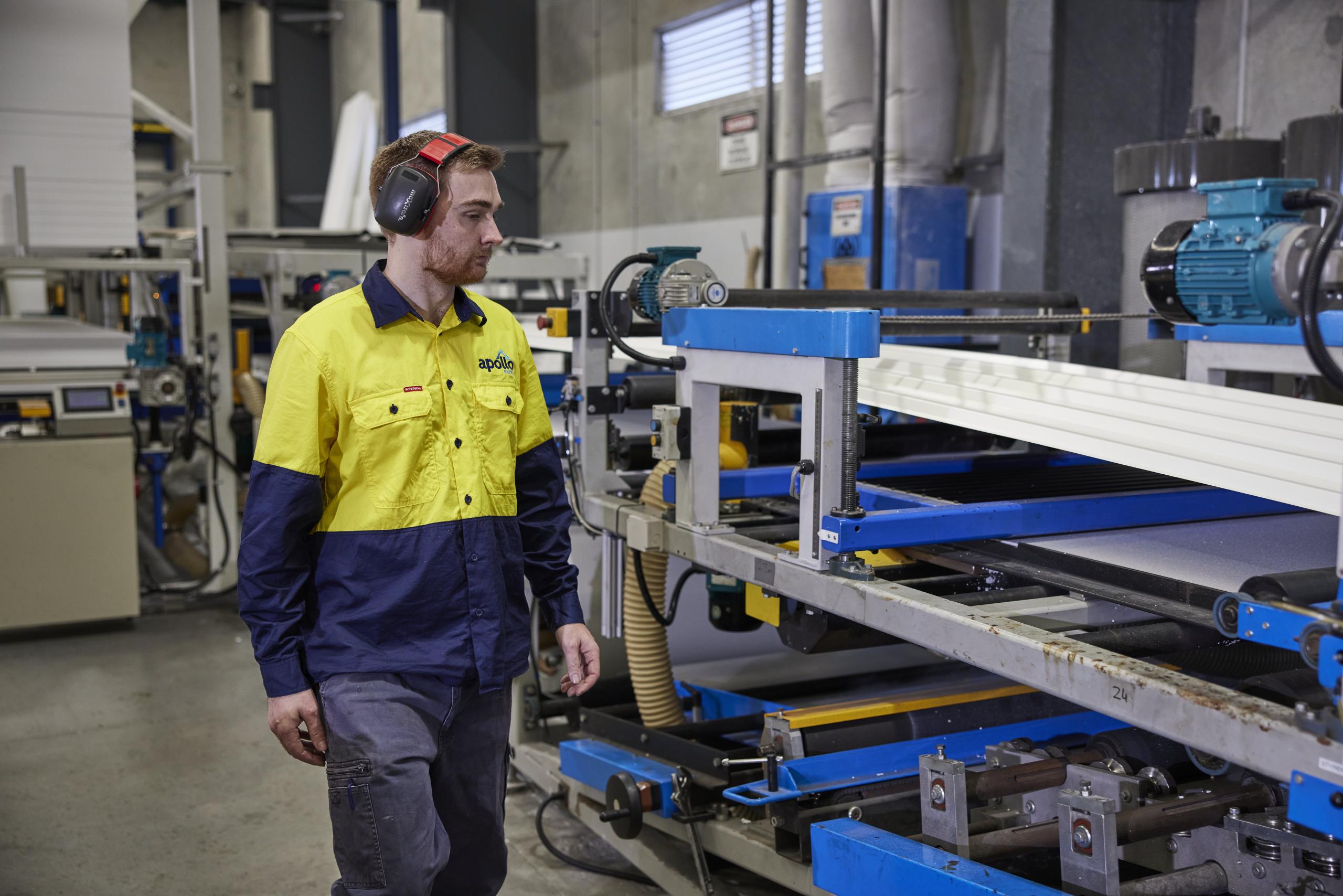
Producing panels to the required length reduces the need for on-site modification and supports installation efficiency.
Apollo Roofing Solutions manufactures panels to the required length for both residential and commercial projects. Sheets arrive on site already cut to size, reducing on-site modification requirements during installation on a residential job or a larger commercial project.
Where manufacturing is managed in-house, custom length orders can be produced with consistent lead times, reducing reliance on third-party suppliers.
The Paint Finish and What the Warranty Actually Covers
The coating applied to a roofing panel contributes to long-term performance in outdoor environments. Coating systems should be selected based on durability, resistance to weathering, and suitability for the intended application.
A site-specific warranty is available on the Outdoor Flat Mark II paint coat finish from the steel supplier – UniCote®. That is a specific, documented commitment for the location of the project. When comparing products from different suppliers, always confirm what the finish warranty covers and for how long. A long structural warranty alongside a short or absent paint finish warranty may indicate limitations in coating performance. A clearly defined finish warranty provides transparency for long-term performance expectations.
Apollo Roofing Solutions manufactures our Outdoor Flat profile with UniCote® steel in a range of Colorbond equivalent colours, giving contractors and developers flexibility with coastal and standard applications.
Coastal and Corrosive Environment Options
Coastal and corrosive environments require materials designed to withstand increased exposure to salt and moisture. Apollo Roofing Solutions manufactures UniCote Coastal options suited to marine environments, with site-specific warranties available based on location and exposure classification.
This allows material selection and warranty coverage to be aligned with environmental conditions at the specification stage.
Skylight Panels and Why Compatibility Matters
Apollo Roofing Solutions supplies skylight panels designed for compatibility with its single skin roofing profiles. These panels available in lengths of 4, 5, and 6 metres.
Compatibility between roofing and skylight systems is an important consideration.
Because these Skylight Panels are designed to integrate directly with single skin profiles, the system performs as intended and covers the full installation. Mixing skylight products from a separate supplier into an existing roofing system creates questions about fit, weather performance, and where one warranty ends and another begins.
Compliance Documentation That Is Ready When You Need It
Australian building legislation sets specific requirements for roofing products used in construction. Specifying a non-compliant product can affect insurance coverage, certifier sign-off, and the structural integrity of the overall build. The roofing we manufacture undergoes rigorous testing to meet Australian Standards and building legislation. Products are designed and engineered in Australia to perform across Australian weather conditions, including high wind zones, cyclonic regions, and coastal areas.
When sourcing from any supplier, compliance documentation should be available prior to specification. Access to certified test results and supporting documentation assists with certification, insurance, and project approval processes.
Why the Sourcing Decision Matters
Selecting a single skin roofing panel requires consideration of material performance, spanning capability, coating systems, and compliance with project requirements.
Apollo Roofing Solutions supplies single skin roofing systems supported by technical documentation, certified testing, and warranty coverage aligned with Australian conditions.
For project-specific requirements, including product selection and specification support, the team can be contacted to discuss site conditions and performance requirements.
Roofing for Outdoor Spaces
Get the premium roofing solutions and expert support you need. Call Apollo Roofing Solutions today.
Roofing for Outdoor Spaces
Get the premium roofing solutions and expert support you need. Call Apollo Roofing Solutions today.
Roofing Is Not Forgiving, And Neither Are Timelines
Patio construction follows a structured sequence, and roofing installation often sits on the critical path. Once the structure is in place, the roofing system needs to be installed efficiently to allow the project to progress without delays.
Unlike internal building elements, patio roofing is immediately exposed to external conditions. Incorrect installation, poor detailing, or delays in material supply can quickly lead to water ingress, heat build-up, or structural performance issues. These risks increase in environments with high sun exposure, coastal conditions, or variable weather.
For contractors, this makes roofing system selection a key decision early in the project. It is not simply about cost. It is about ensuring the system is fit for purpose, compliant with local requirements, and capable of performing reliably over time.
Apollo Roofing Solutions supports contractors by providing roofing systems that are designed for Australian outdoor conditions, along with consistent supply and practical guidance. This reduces installation risk and helps keep patio projects on schedule.
Proudly Australian
15-year Warranty
Superior Strength
Superior Spans
Saves on materials and labour costs
Improved Efficiency
All panels are custom made to order to suit your project
High Thermal Rating
Increases comfort levels, plus reduces the heating and cooling requirements
Range of Colours
Standard Colorbond equivalent colours available*
Material Specifications and Quality
Steel gauge significantly impacts single skin roofing performance and longevity. Standard residential applications typically use 0.42mm BMT (base metal thickness) steel, whilst higher-performance applications may specify 0.48mm BMT or thicker for enhanced durability and spanning capacity. G550 high tensile steel provides superior strength-to-weight ratios compared to lower-grade steel, enabling greater spanning capabilities with thinner material gauges. This high tensile specification is particularly valuable for applications requiring extended spans without intermediate support.
Protective coatings are critical for corrosion resistance and longevity. Zincalume (aluminium/zinc alloy) coatings provide excellent protection in most Australian environments. For coastal and marine applications, enhanced coatings like UniCote® Coastal with increased metallic coating thickness and advanced paint technology deliver superior corrosion resistance.
Spanning Capabilities
One of the key performance characteristics of single skin roofing is spanning capacity. Quality single skin products can achieve spans up to 4.7 metres in suitable wind regions and structural configurations, significantly reducing structural support requirements. Spanning capability depends on multiple factors including steel gauge and grade, profile depth and geometry, wind region classification, number of sides open on the structure, and load requirements including live loads and environmental loads.
Span tables provided by manufacturers detail allowable spans for specific wind regions and structural configurations. For example, a 0.48mm BMT G550 steel profile might achieve 4.7-metre spans in N1-N4 wind regions with three sides open, but require reduced spans in cyclonic N5 regions or more enclosed configurations.
Understanding these span limitations is critical for proper specification and structural design. Over-specifying spans can lead to structural failure or excessive deflection, whilst underestimating spanning capacity results in unnecessary structural costs.
Apollo Single Skin Roofing and Available Colours
Apollo single skin roof sheeting is constructed from G550 Hi Tensile 0.48 gauge steel that can span up to 4.7 metres.
The Apollo Outdoor Flat profile is available in UniCote® Coastal steel in a selection of colours.
Unilink Outdoor Flat Mk II® Profile

Top:
White
Bottom: White
*Also available in Unicote Coastal

Top:
Merino
(Paperbark®)
Bottom: Merino (Paperbark®)

Top:
Smooth Cream (Classic Cream™)
Bottom:
Smooth Cream (Classic Cream™)

Top:
Monolith (Monument®)
Bottom: White
*Also available in Unicote Coastal

Top:
Slate Grey (Woodland Grey®)
Bottom: White

Top:
Slate Grey (Woodland Grey®)
Bottom: Merino (Paperbark®)
Unilink 2000® Profile
Maxisatin
Durasheen
Top:
White
Bottom: White
Durasheen
only
Top:
Merino
(Paperbark®)
Bottom: Merino (Paperbark®)
Maxisatin
Durasheen
Top:
Smooth Cream (Classic Cream™)
Bottom:
Smooth Cream (Classic Cream™)
Durasheen
only

Top:
Slate Grey (Woodland Grey®)
Bottom:
Smooth Cream (Classic Cream™)
Paint Finishes and Colour Options
Modern single skin roofing is available in a range of colours and paint finish options to complement any architectural design.
Apollo Outdoor Flat MkII is manufactured using UniCote® Select or UniCote® Coastal steel.
Apollo UniLink 2000 finishes include Maxisatin (lower glass – 25% gloss topside and 25% gloss underside) and Durasheen (higher gloss – 55% topside, 80% underside). Paint finish selection impacts both aesthetics and how light and bright the ceiling appears.
Manufacturers commonly provide a 15-year warranty on paint finishes against peeling, chalking, or fading. In some applications, for example near marine or corrosive environments, a site-specific warranty can be obtained.
Colour selection ranges from classic whites and creams through to contemporary greys, earthy tones, and traditional heritage colours like manor red. This palette allows matching existing home colours or creating distinctive design statements.
For coastal applications, colour availability may be more limited when specifying enhanced corrosion-resistant coatings. UniCote® Coastal products typically offer popular or core colours that balance aesthetic choice with maximum corrosion protection.
Installation Advantages
Single skin roofing systems offer significant installation efficiency compared to tile or other alternative roofing materials. Lightweight steel sheets reduce structural load requirements and simplify handling on site, whilst extended lengths minimise joints and potential leak points.
Modern single skin roofing is manufactured to exact project lengths, arriving on site ready for installation with minimal cutting required. This precision manufacturing reduces waste, speeds installation, and ensures weathertight performance when properly installed.
Concealed fix profiles like Unilink systems feature self-mating interlocking joints that create weathertight seals without requiring additional sealants. These joint designs simplify installation whilst providing superior weather protection compared to exposed fix alternatives. The lightweight nature of steel roofing also reduces structural requirements. Lighter roof loads mean smaller beams, fewer posts, and simplified foundations, translating to material cost savings and faster overall construction timelines.
Wind Performance and Cyclonic Applications
Australia’s diverse climate zones require roofing products tested and certified for various wind classifications. Single skin roofing undergoes independent testing to verify performance in both non-cyclonic and cyclonic wind regions.
For cyclonic regions including North Queensland and northern coastal areas, single skin roofing must meet stringent wind load requirements. Properly specified and installed products can achieve certification for the most severe cyclonic conditions, providing safe, reliable protection in extreme weather events.
Wind performance varies based on installation details including fastener type and spacing, structural support configuration, and edge and penetration flashing details. Following manufacturer installation guidelines and engineering specifications is critical for achieving certified wind performance.
Cost Effectiveness
Single skin roofing’s primary advantage is cost effectiveness. Material costs are significantly lower than insulated panel alternatives, making single skin roofing ideal for budget-conscious projects or applications where thermal performance is less critical. The total installed cost advantage extends beyond material pricing. Faster installation reduces labour costs, lightweight materials simplify handling and structural requirements, extended spans reduce support framing needs, and minimal maintenance requirements reduce lifecycle costs.
For applications like carports, verandas, and outdoor storage areas where thermal and acoustic performance are not priorities, single skin roofing delivers excellent value. The durability and longevity of quality steel roofing ensures decades of reliable performance at modest initial investment.
Thermal Considerations
Single skin steel roofing without insulation provides minimal thermal resistance. The thin steel profile allows rapid heat transfer, making uninsulated single skin roofing unsuitable for applications requiring thermal comfort without additional insulation.
For patio and outdoor living applications where thermal performance matters, single skin roofing can be combined with separate insulation and ceiling systems, though this requires additional trades and installation time.
Reflective paint colours can improve thermal performance by reducing solar heat absorption. Light colours like white or cream reflect more solar radiation than darker colours, helping reduce heat gain in covered areas. However, colour selection alone cannot match the thermal performance of properly insulated systems.
Acoustic Performance
Single skin steel roofing amplifies rain noise compared to insulated alternatives. The thin steel sheet acts as a drum skin, transmitting sound directly into covered spaces below. This acoustic characteristic can be problematic for entertainment areas or spaces where noise control is important. For applications where rain noise is a concern, single skin roofing can be combined with acoustic insulation batts and ceiling linings to improve sound dampening. However, this layered approach still may not match the acoustic performance of purpose-designed insulated panel systems.
In less noise-sensitive applications like commercial spaces, carports, sheds, or open areas, walk-ways or verandas, the acoustic limitations of single skin roofing are typically acceptable trade-offs for the cost savings achieved.
Maintenance and Longevity
Quality single skin roofing with durable paint finishes requires minimal maintenance over its service life. Regular cleaning to remove debris, leaves, and surface dirt maintains appearance and prevents potential issues from organic material accumulation.
In coastal environments, more frequent washing is required to remove salt deposits that can accelerate corrosion. Following manufacturer maintenance guidelines helps ensure warranty coverage and maximises product lifespan in harsh conditions.
Paint finishes on quality single skin roofing resist fading, chalking, and deterioration for decades. Many manufacturers provide 15-year warranties on paint performance, demonstrating confidence in long-term durability and colour retention.
Steel roofing’s inherent durability means properly maintained single skin roofing can provide 50 years or more of reliable service. This longevity far exceeds many alternative roofing materials, delivering excellent lifecycle value.
Skylights and Natural Lighting
Single skin roofing systems can accommodate skylight panels to enable natural light to filter into the covered area.
Polycarbonate or acrylic skylight sheets install in the same profile as the steel roofing, creating weathertight integration whilst allowing light transmission.
For covered outdoor areas, skylights reduce the enclosed feeling created by solid roofing whilst maintaining weather protection. The natural light creates brighter, more inviting spaces without requiring artificial lighting during daytime hours.
Quality skylight panels feature UV-resistant materials that prevent yellowing and degradation from sun exposure. High-impact acrylic options provide enhanced durability and maintain strength over long spans, matching the spanning capabilities of the steel roofing.
Fire Performance
Steel roofing is inherently non-combustible, providing excellent fire performance for bushfire-prone areas. This non-combustible characteristic makes single skin steel roofing suitable for Flame Zone (FZ) applications and bushfire attack level (BAL) rated areas.
For bushfire applications, proper detailing of roof penetrations, flashings, and integration with other building elements is critical. Single skin roofing alone provides the non-combustible roof covering, but complete bushfire protection requires compliant practices throughout the roof assembly.
Gutters and Drainage
Proper gutter and drainage design is critical for single skin roofing performance. Steel roofing efficiently sheds water, requiring adequately sized gutters and downpipes to manage stormwater runoff during heavy rain events.
Matching gutter colours to roofing creates cohesive aesthetics. Apollo manufactures gutters in all roofing colours, allowing colour coordination or complementary colour schemes.
Applications and Suitability
Single skin roofing suits diverse applications where cost effectiveness and durability are priorities. It also only requires 1 degree of fall for water run off.
Common applications include carports and vehicle shelters, verandas, outdoor storage, agricultural buildings and sheds, commercial canopies and walkways, and industrial applications.
For residential patios and outdoor living areas where thermal comfort and noise control are important, single skin roofing may be less suitable than insulated alternatives. However, when combined with separate insulation and ceiling systems, single skin roofing can improve comfort.
Specification Considerations
When specifying single skin roofing, consider steel gauge appropriate for required spans, protective coating suitable for environmental exposure, profile style matching aesthetic requirements, paint finish and colour selection, wind rating compliance for site location, fastener specifications and installation details, and gutter sizing for drainage requirements.
Working with manufacturers during specification ensures appropriate product selection and compliance with building standards. Detailed span tables, wind load certifications, and installation guidelines support proper specification and installation.
Conclusion
Single skin roofing delivers cost-effective, durable weather protection for diverse applications. Understanding spanning capabilities, material specifications, and appropriate applications enables roofing professionals to specify single skin steel roofing products where they provide optimal value.
Whilst single skin roofing lacks the integrated thermal and acoustic benefits of insulated panel systems, its affordability, proven performance, and installation efficiency make it ideal for budget-conscious projects and applications where comfort factors are less critical. Quality single skin roofing backed by comprehensive warranties provides decades of reliable service with minimal maintenance.